News
-
01-13 2026
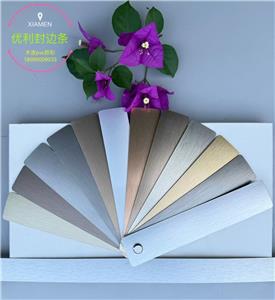
Metallic brushed aluminum edging
The brushed metal edging strip is a common decorative material that combines the durability of metal with the aesthetic advantages of the brushing process. Its main benefits include the following aspects: Enhancing overall quality and aesthetics: The brushing process creates a uniform linear texture on the metal surface, presenting a matte or semi-gloss effect, which can effectively enhance the sense of sophistication and modernity of the space. This texture not only visually creates layers but also perfectly blends with various decoration styles (such as modern minimalism, light luxury style), enhancing the exquisiteness of details High scratch resistance and durability: The brushed metal surface, after special treatment, is dense and wear-resistant, effectively concealing minor scratches from daily use and maintaining a long-lasting, as-new appearance. Stainless steel or aluminum alloy materials also possess moisture-resistant and corrosion-resistant properties, making them suitable for use in wet environments such as kitchens and bathrooms High practicality, combining protective and decorative functions: Edge banding is primarily used to cover seams, burrs, or edges, preventing damage from knocks, while also serving to enhance the appearance of the finished edges. For instance, when applied to the edges of walls, ceilings, or furniture, it can enhance structural stability and, through its linear design, add a sense of three-dimensionality and depth to the space Easy to install and widely adaptable: Many metal brushed edge strips feature self-adhesive design or cuttable craftsmanship, making DIY installation convenient and eliminating the need for professional tools. Their material can be bent or customized to various curves, suitable for a wide range of structures including right angles and arcs, offering high flexibility
-
02-14 2025
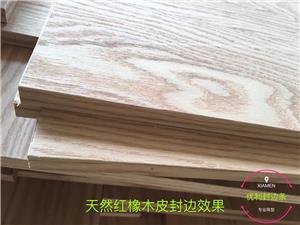
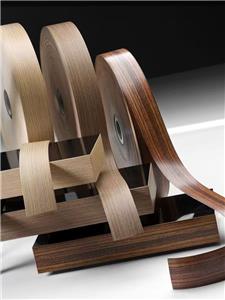
PVC edge banding and solid wood edge banding each have their unique advantages and disadvantages
PVC edge banding advantage: 1. Diverse appearance: PVC edge banding can imitate various materials, such as wood grain, marble, cloth grain, etc., with rich visual effects. 2. Lightweight: Compared to solid wood edge banding, PVC edge banding is lighter and easier to process and install. 3. Wear resistance: PVC material has good wear resistance and can resist scratches during daily use. 4. Waterproof and moisture-proof: PVC edge banding can effectively prevent moisture infiltration and is suitable for humid environments. 5. High cost-effectiveness: PVC edge banding is relatively affordable and an economical choice. 6. High production efficiency: Modern furniture production equipment is abundant, and modular furniture is easy to handle. Disadvantages: 1. Unstable quality: The quality of PVC edge banding on the market varies greatly, and some products may be prone to aging and breakage. 2. Obvious color difference: After trimming, there may be color difference in the PVC edge banding, which affects the appearance. 3. Poor high temperature resistance: PVC edge banding is prone to deformation in high temperature environments. Solid wood edge banding advantage: 1. Natural texture: Solid wood edge banding has the texture and texture of natural wood, beautiful and natural. 2. Strong environmental friendliness: Solid wood edge banding has superior environmental performance and does not contain harmful substances. 3. Soft and not easily deformed: Solid wood edge banding is soft and not easily deformed, and has good adhesion to furniture boards after bonding. Disadvantages: 1. Weak moisture resistance: Solid wood edge banding has poor moisture resistance and is prone to deformation or cracking due to moisture. 2. Expensive price: The production cost of solid wood edge banding is relatively high, and the price is relatively expensive. 3. High processing difficulty: A high level of craftsmanship is required during the processing of solid wood edge banding to ensure the edge banding effect. In summary, PVC edge banding and solid wood edge banding each have their own advantages and disadvantages. When choosing, comprehensive consideration can be given to factors such as the furniture's usage environment, personal aesthetics, and budget.
-
01-17 2025
The advantages of ABS edge banding
1. ABS edge banding does not add any fillers (such as calcium carbonate) during the production process, so the rounded corners are smooth, shiny, and textured after trimming, and the surface has strong impact resistance. 2. ABS edge banding has good dimensional stability and only undergoes shrinkage deformation at a high temperature of 99 degrees Celsius. 3. ABS edge banding has strong resistance to chemical corrosion and is constantly renewed over time. Coffee, soy sauce, alcohol, and other substances will not cause any damage to its surface. 4. ABS edge banding has no irritating odor. 5. ABS edge banding can be directly burned at high temperatures without air pollution, which is beneficial for environmental protection.